Sacramento Cemetery Headstone Rules: Size, Material, and Installation Requirements
By Remembrance Headstones16 min read
Sacramento cemetery headstone rules vary by individual cemetery. Most require flat grave markers or upright monuments. Typical size limits are 24 to 48 inches wide. Upright monuments are 16 to 42 inches tall. Approved materials are almost always granite or bronze. Families must submit a design approval form before installation begins. A licensed monument dealer handles this coordination.
What Are the Most Common Headstone Size Requirements in Sacramento Cemeteries?
Size requirements are among the most misunderstood parts of the headstone process, and getting them wrong is costly. Sacramento County has more than 60 cemeteries (coroner.saccounty.gov), and each one publishes its own monument regulations document with section-specific dimensional limits. There is no single county-wide standard. A headstone that fits perfectly in one section at East Lawn Memorial Parks may exceed the allowable footprint. This can happen two rows away in a different section. We have guided countless families through this scenario. We always request section-specific guidelines directly from the cemetery office. We do not rely on general brochures. Upright monument widths typically range from 24 to 48 inches. The range depends on section and lot type. Thickness minimums, usually 4 to 6 inches, are enforced to prevent tipping and ensure the stone remains stable through Sacramento's seasonal temperature swings. Always request the section-specific guidelines, not just the general cemetery brochure.
The distinction between section types matters more than most families realize. Lawn-care sections require flat grave markers so maintenance crews can mow without obstruction. Garden or upright sections allow taller monuments. Some older sections within cemeteries like St. Mary Cemetery or Sacramento Memorial Lawn carry grandfathered rules that differ from the current general guidelines, meaning the person in the lot next to yours may have a different size allowance than you do. Checking section-specific rules before ordering is not optional. It is the single most important step.
Upright Monument Dimensions vs. Flat Marker Dimensions
Upright monuments and flat markers follow completely different dimensional frameworks, and mixing up the two is a common source of rejected submissions. A typical upright granite headstone measures 42 inches tall, 13 inches wide, and 4 inches thick at the die (the upper stone portion), according to industry standards. The base adds 4 to 8 inches to overall height and must extend 2 to 4 inches beyond the die on each side. Most Sacramento-area cemeteries require a reinforced concrete foundation beneath the base, poured by cemetery staff. Flat markers, by contrast, are flush or slightly raised, no more than 3 to 4 inches above grade. Standard flat marker sizes run 24x12 inches or 28x16 inches, depending on the cemetery and lot type.
At Corcoran Cemetery, a nearby California facility that publishes clear written rules, single plots allow markers up to 30 inches by 12 inches, while double plots allow 36 inches by 12 inches, and lot-only markers are limited to 20 inches by 10 inches (corcorancemetery.com). Flat and 6-inch pillow markers are permitted on single and double plots there (corcorancemetery.com). These numbers illustrate the kind of precise, section-specific limits you will find at Sacramento-area cemeteries like East Lawn and Sacramento Memorial Lawn, where rules are similarly granular. Some lawn sections at these parks require the base and die to be fabricated as one continuous piece, eliminating the two-part upright assembly entirely.
How Lot Type Affects Maximum Allowable Size
Lot type is the primary variable that determines what size headstone a cemetery will approve. Single adult lots carry tighter width limits than companion or estate lots. Infant and child sections commonly cap marker width at 18 to 24 inches, and the permitted height is often restricted to flat or very low-profile markers to preserve the aesthetic of those areas. Veterans sections follow a different framework altogether. The U.S. Department of Veterans Affairs provides granite flat markers in a standard 24x12-inch format and upright granite markers at 42 inches tall, and Sacramento-area cemeteries with dedicated veterans sections must accept VA-furnished markers at those dimensions. Privately purchased markers in veterans sections must conform to those same VA National Cemetery Administration guidelines, even when the section sits within a civilian cemetery like East Lawn Elk Grove.
Garden mausoleum niches follow completely separate tablet-size rules. If your loved one is interred in a niche rather than an in-ground burial, the plaques are typically 11x11 inches or 12x12 inches, a far smaller canvas than an outdoor headstone. Companion or double monuments have their own enlarged allowances, often 48 inches wide and 24 to 36 inches tall. Family estate markers require advance written approval and typically exceed standard size limits by a significant margin. The takeaway: never assume the size of the neighboring headstone reflects your own allowance.
Which Materials Do Sacramento Cemeteries Approve for Headstones?
Granite dominates the approved material list at virtually every Sacramento-area cemetery. Sacramento's Central Valley location means hot, dry summers, occasional winter frost, and significant UV exposure year-round. Granite handles all of these conditions with minimal maintenance. Bronze on granite bases is the second most accepted option, especially for veterans sections. Marble, once common in Sacramento's older cemeteries, is now restricted or discouraged at most parks because of its susceptibility to spalling and surface erosion in the valley climate.
Manufactured stone, fiberglass, wood, and polymer composites are essentially never approved at Sacramento memorial parks. These materials cannot meet the durability standards that cemeteries enforce to protect the long-term appearance of their grounds. Families do not need to provide quarry documentation or material certifications directly, but the monument supplier must meet the cemetery's specifications, which means working with a dealer who understands what each park requires. Granite color, whether black, gray, red, mahogany, or blue pearl, does not typically affect approval, though certain lawn sections restrict dark polished finishes for aesthetic uniformity across the section.
Why Granite Is the Standard for Sacramento Memorial Parks
Granite's dominance as the material of choice for headstone design in Sacramento is not simply tradition. It is engineering. In our experience, families who select granite upfront avoid the replacement costs and emotional burden that come with switching from deteriorated marble markers years later. Granite rates between 6 and 7 on the Mohs hardness scale, placing it above most weathering agents including acid rain, surface mold, and the freeze-thaw cycles that crack softer stones. Polished granite surfaces retain laser-etched portraits and inscriptions for well over a century without significant fading, making it the right choice for a permanent memorial. The granite segment is expected to account for 43.6% of tombstone market share globally in 2026 (coherentmarketinsights.com), driven precisely by these durability advantages. Marble, by contrast, is a metamorphic stone with a surface that reacts to atmospheric moisture over time. In Sacramento's climate, marble headstones installed 40 or 50 years ago frequently show significant surface erosion that has rendered inscriptions unreadable.
At Remembrance Headstones, we have seen this firsthand when families come to us about replacing deteriorated marble markers with new granite custom memorials. The replacement cost and emotional toll of revisiting that process years later is entirely avoidable by selecting granite at the outset. Beyond durability, granite accepts a wider range of surface treatments, from high-polish black for laser portraiture to thermal finishes for a natural stone look. These options give families genuine design flexibility within the material boundaries that Sacramento cemeteries require.
Bronze Markers: Requirements and Common Use Cases
Bronze markers serve a specific and important role in Sacramento-area cemeteries, particularly in veterans sections. The VA provides free bronze markers to eligible veterans, and cemeteries must accept these at the VA's standard dimensions. Privately purchased bronze markers must meet minimum alloy thickness standards, typically 3/16 inch minimum, to ensure the surface does not warp or separate from the granite base over time. Bronze is almost always mounted on a granite base, with the cast relief surface displaying the name, dates, military emblem, and any additional inscription. The base provides structural stability and meets the cemetery's foundation requirements simultaneously.
Bronze develops a natural patina over years of outdoor exposure, shifting from its original warm gold tone to a darker green-brown. Some families choose lacquered bronze finishes to slow this process, while others prefer the natural aging. Either option is generally acceptable at Sacramento cemeteries, but it is worth confirming with the specific memorial park whether lacquered finishes require any special approval. Bronze markers are also more common in lawn sections because their lower profile meets flush-grade requirements, while still allowing for more detailed cast relief artwork than a standard flat granite marker.
Headstone Type Comparison: Sacramento Cemetery Options
Choosing between monument types involves weighing section restrictions, budget, and long-term maintenance. The table below summarizes the key differences across the three most common options at Sacramento-area cemeteries.
| Feature | Upright Granite Monument | Flat Granite Marker | Bronze on Granite Base |
|---|---|---|---|
| Typical Width | 24 to 48 inches | 24 to 28 inches | 24 to 28 inches |
| Typical Height | 16 to 42 inches above base | Flush to 4 inches above grade | Flush to 4 inches above grade |
| Foundation Required | Yes, reinforced concrete | Sand-set or mortar | Sand-set or mortar base |
| Sections Allowed | Upright/Garden sections | Lawn and most sections | Most sections, required for some Veterans areas |
| Customization Options | High (portrait etching, 3D carving, color) | Moderate (etching, emblems) | Moderate (cast relief, emblem, photo insert) |
| Durability | 100+ years with minimal maintenance | 100+ years, less exposed surface | Bronze surface patinas over time |
| Typical Cost Range | $1,500 to $8,000+ | $400 to $1,500 | $600 to $2,500 |
| VA-Eligible Option | No (private purchase only) | Yes (granite VA markers) | Yes (bronze VA markers provided free) |
What Is the Headstone Installation Process at Sacramento Cemeteries?
The installation process at Sacramento cemeteries follows a defined sequence that families often underestimate in terms of time and coordination. From the moment a family selects a design to the day the completed monument is set at the gravesite, the total timeline typically runs 6 to 10 months. That figure includes production, foundation curing, and cemetery scheduling. A standard headstone with basic engraving may be completed in 6 to 10 weeks, but the installation steps that follow production add significant time. Families who begin the process expecting a few weeks are frequently caught off guard. Starting early, ideally within weeks of the burial, gives the most flexibility.
Every Sacramento cemetery requires written approval of the design before production begins. No reputable monument dealer starts cutting stone without that approval in hand. The approval process itself takes 1 to 4 weeks at most local parks, so the total pre-production window is meaningful. Once the stone is complete, the cemetery must pour and cure a concrete foundation before the headstone can be set. Foundation cure time at most Sacramento locations is 28 days. Only after the foundation has cured does the setting crew arrive to place the monument and secure it with epoxy adhesive and stainless steel pins.
Step-by-Step Approval Workflow Before Installation
Understanding each step prevents delays and ensures the gravesite reaches its finished state without unnecessary back-and-forth. The process is straightforward when managed by an experienced monument dealer, but families who attempt to navigate it alone frequently encounter submission errors that reset the clock.
Step 1 is obtaining the cemetery's written monument regulations document from the office directly. Step 2 involves working with your dealer to produce a to-scale design proof that meets every dimensional and material specification in that document. Step 3 is submitting the proof, the lot deed or interment confirmation, and a completed permit application to the cemetery office. Step 4 is waiting for written approval, which takes 1 to 4 weeks at most Sacramento parks. Step 5 is the start of production, which may take 6 to 10 weeks for a standard granite headstone or 3 to 6 months for a more detailed custom monument. Step 6 is the cemetery scheduling the foundation pour and setting date after production is complete.
Foundation and Setting Requirements Specific to Sacramento
Sacramento's clay-heavy soil conditions in many neighborhoods make proper foundation work especially important for upright monuments. Most Sacramento-area cemeteries pour a reinforced concrete foundation that extends 6 to 12 inches below grade, sized to match or exceed the base footprint of the specific monument being installed. The foundation must cure, typically for 28 days, before any weight is placed on it. Cutting corners on curing time is one of the most common causes of monument settling or tilting in the years after installation. Upright monuments are then secured at the base-to-die joint with epoxy adhesive and stainless steel pins, creating a mechanically bonded assembly that resists both seismic movement and vandalism.
Flat markers in lawn sections are handled differently. They are typically set flush with the surrounding ground using a sand-set or mortar method, allowing mower access without any protrusion above grade. Some cemeteries require the cemetery's own setting crew to perform all installation work and will not permit outside installers regardless of dealer qualifications. Others maintain an approved contractor list. Confirming this policy before hiring a monument dealer is essential, because using an unapproved installer can result in the monument being removed at the family's expense.
Sacramento Cemetery-Specific Rules You Need to Know Before Ordering
With more than 60 cemeteries in the county (coroner.saccounty.gov) and 21 designated historic cemeteries (coroner.saccounty.gov), the variation in rules is substantial. East Lawn Memorial Parks operates multiple locations in the Sacramento area, including its East Sacramento campus and its Elk Grove location, and the two sites do not share identical section rules. What is permitted at East Lawn Elk Grove in terms of monument height or base dimensions may differ from what the East Sacramento location approves in a comparable section. The only reliable way to confirm is to request the written monument regulations for the specific section at the specific location where interment occurred.
Sacramento Memorial Lawn, St. Mary Cemetery (operated by the Roman Catholic Diocese of Sacramento), and Elk Grove Memorial Park each publish their own rules and apply them independently. Religious cemeteries like St. Mary add an additional layer: inscription and emblem restrictions that reflect the organization's affiliation. Certain phrases, symbols, or artistic elements that are fully permitted at a secular park may be restricted or prohibited at a religiously affiliated cemetery. Pre-need monument orders are particularly vulnerable to this issue, because rules in effect at the time of installation govern approval, not the rules that existed when the purchase was made years earlier.
How to Read and Interpret a Cemetery's Monument Regulations Document
Cemetery monument regulations documents are typically 2 to 10 pages and organized by section type, such as lawn, garden, mausoleum, or columbarium. Many families receive these documents and feel overwhelmed immediately. The most important sections to locate are the dimensional tables (which list minimum and maximum sizes by lot type), the materials section (which lists approved and prohibited materials), the outside dealer section (which determines whether your chosen monument company can legally install), and the inscription restrictions section (which may limit font size, character count, or specific phrases).
Diagrams and drawings included in these documents show exact foundation dimensions and anchor placement. Your monument dealer needs these drawings to fabricate the correct base. If the regulations document does not include diagrams, ask the cemetery office for a supplemental technical specification sheet. Many Sacramento cemeteries maintain this as a separate document given to dealers upon request. Uniformity and safety are the twin rationales behind every rule in these documents. Cemeteries enforce size and material limits to maintain visual consistency across sections and to prevent structural failures that could endanger maintenance workers or visitors. These are not arbitrary bureaucratic hurdles.
How to Work With a Monument Dealer to Ensure Cemetery Approval
Selecting a monument dealer who knows Sacramento-area cemeteries by name, section, and current rule version is the single most effective way to avoid delays, rejections, and costly revisions. An experienced local dealer maintains current relationships with the offices at East Lawn, Sacramento Memorial Lawn, St. Mary, and the other major parks in the region. They know which cemeteries require the setting crew to be cemetery-employed, which parks have recently updated their regulations, and which sections carry unusual restrictions that are not obvious from the general guidelines document. This institutional knowledge cannot be replicated by browsing a cemetery's website.
Reputable dealers submit the design approval package to the cemetery on the family's behalf, including the proof, permit application, and any supplemental documentation required. This removes the most administratively burdensome part of the process from a family that is already managing grief. 3D design previews allow families to approve lettering placement, portrait artwork, and overall layout before any stone is cut, eliminating the risk of production errors that cannot be undone. Ask whether the dealer has installed at your specific cemetery in the past 12 months. Ask whether they will handle permit submission. Ask about their revision policy if the cemetery requests a design change after submission. These questions separate experienced providers from those who will leave you managing the process alone.
Questions to Ask Your Monument Dealer Before Signing a Contract
Before committing to any monument dealer for a Sacramento cemetery installation, ask these six specific questions and evaluate the answers carefully. They reveal whether the dealer has real local experience or is simply accepting an order they may struggle to fulfill.
- Have you installed headstones at this specific cemetery in the past 12 months?
- Will you handle the cemetery permit application and approval submission on my behalf?
- What is your revision policy if the cemetery requests a design change after submission?
- Can I see a to-scale 3D design proof before production begins?
- What warranty do you offer on the material and craftsmanship?
- Is the cemetery setting fee included in your quote, or is it a separate cost I pay directly to the cemetery?
A concrete example: consider a family arranging a companion headstone installation at East Lawn Elk Grove after the loss of a spouse, planning ahead for the surviving partner. A dealer unfamiliar with that specific location might submit a design proof with a base dimension that is 2 inches too narrow for the companion lot's required foundation, triggering a rejection and resetting the production timeline by 6 or more weeks. A dealer with direct experience at that location would have caught the discrepancy before submission. Results like that are why local expertise matters. Headstone financing options, including interest-free payment plans, should also be part of the conversation so budget constraints do not force a compromise on material quality or monument size.
Frequently Asked Questions
Can I buy a headstone from an outside vendor for a Sacramento cemetery or must I use the cemetery's own supplier?
Most Sacramento cemeteries permit outside monument dealers, but some require the installation to be performed by their own crew or an approved contractor list. Always confirm the specific cemetery's outside dealer policy before placing an order. Your monument dealer should verify this directly with the cemetery office as part of the approval process.
How long does it take to get a headstone approved and installed in Sacramento?
The total timeline typically runs 6 to 10 months from initial selection to completed installation, including design approval, production, foundation curing, and cemetery scheduling. A standard headstone with basic engraving may be produced in 6 to 10 weeks, while detailed custom monuments often take 3 to 6 months in production alone before installation begins.
What happens if my headstone does not meet the cemetery's size or material requirements after it is made?
If a headstone fails cemetery approval after production, the family generally bears the cost of corrections or replacement. This is why written cemetery approval must be obtained before any stone is cut. A reputable dealer submits designs for approval first and holds production until written confirmation is received from the cemetery office.
Are there specific rules for headstones at Veterans sections in Sacramento-area cemeteries?
Yes. Veterans sections at Sacramento cemeteries typically follow VA National Cemetery Administration guidelines. The VA provides free bronze flat markers and upright granite markers at standard dimensions, which cemeteries must accept. Privately purchased markers in veterans sections must conform to those same VA dimension standards, even at civilian cemeteries like East Lawn or Sacramento Memorial Lawn.
Do Sacramento cemeteries allow QR codes or photo portraits on headstones?
Many Sacramento cemeteries permit laser-etched photo portraits on granite headstones, and QR codes are increasingly accepted as an add-on feature. Approval depends on the specific cemetery's inscription and emblem policy. Religiously affiliated cemeteries like St. Mary may have additional restrictions on imagery. Confirm with the cemetery office before including either element in your design.
What is a cemetery setting fee and how much does it typically cost in Sacramento?
A cemetery setting fee is a charge paid to the cemetery to schedule the foundation pour and headstone installation on its grounds. Amounts vary by cemetery and monument type. This fee is separate from the headstone purchase price and is typically paid directly to the cemetery office. Ask your monument dealer whether their quote includes this fee or lists it as a separate line item.
Can I install a headstone myself or does it have to be done by a licensed installer?
Self-installation is not permitted at Sacramento-area cemeteries. Most parks require installation to be performed either by the cemetery's own crew or by a dealer on the cemetery's approved contractor list. Unauthorized installation can result in the monument being removed at the family's expense. Always confirm installer eligibility with the cemetery office before selecting a monument dealer.
Are flat grave markers required everywhere in Sacramento cemeteries or only in certain sections?
Flat markers are required only in designated lawn sections, where flush-grade markers allow maintenance crews to mow without obstruction. Garden sections, upright sections, and certain older areas within cemeteries permit taller monuments. Section type, not cemetery name, determines whether a flat marker is required. Always verify the specific rule for your section before ordering.
Do East Lawn and Sacramento Memorial Lawn allow flat markers only or upright headstones too?
Both East Lawn Memorial Parks and Sacramento Memorial Lawn permit upright headstones in designated garden or upright sections, and flat markers in lawn sections. The rules differ by section within each location, and the two East Lawn campuses, East Sacramento and Elk Grove, may not share identical allowances. Request section-specific written guidelines from the office at your specific location.
What stone materials are approved for headstones at these Sacramento cemeteries?
Granite is the universally approved material at East Lawn, Sacramento Memorial Lawn, and virtually every other Sacramento-area cemetery. Bronze on a granite base is approved at most parks, especially in veterans sections. Marble is restricted or discouraged due to weathering in the Central Valley climate. Manufactured stone, fiberglass, and wood are not approved at Sacramento memorial parks.
Are there size limits for single and double grave markers there?
Yes. Single adult lots carry tighter width and height limits than companion or double lots, and the specific numbers differ by section. At nearby California cemeteries with published rules, single plots allow markers up to 30x12 inches and double plots up to 36x12 inches as examples. East Lawn and Sacramento Memorial Lawn publish their own section-specific tables. Always request the written regulations for your section.
Do these cemeteries require specific marker foundations or installation methods?
Yes. Most Sacramento-area cemeteries, including East Lawn and Sacramento Memorial Lawn, require a reinforced concrete foundation poured by cemetery staff, extending 6 to 12 inches below grade. The foundation must cure, typically 28 days, before the headstone is set. Upright monuments are secured with epoxy and stainless steel pins. Flat markers in lawn sections use a sand-set or mortar method.
Can I get the exact headstone rules from East Lawn Elk Grove vs East Sacramento?
Yes, but you must request the written monument regulations document directly from the office at each specific location. East Lawn Elk Grove and East Lawn East Sacramento operate under the same parent organization but may apply different section-specific dimension limits and outside dealer requirements. Call or visit the cemetery office for the location where interment occurred and ask for the current monument regulations in writing.
Sources & References
About the Author
Remembrance Headstones
Remembrance Headstones is Sacramento's leading custom granite headstone designer with over 60 years of experience guiding families through personalized memorials, 3D design, and cemetery coordination.
Related Posts
Total Headstone Cost in Sacramento: Foundation Fees, Setting Fees, and Hidden Charges
Buying a headstone in Sacramento involves more than the monument price. Foundation installation, cemetery setting fees, permits, and engraving extras can add hundreds to your total. This guide breaks down every charge so families can plan with confidence and avoid surprises.
11 min read
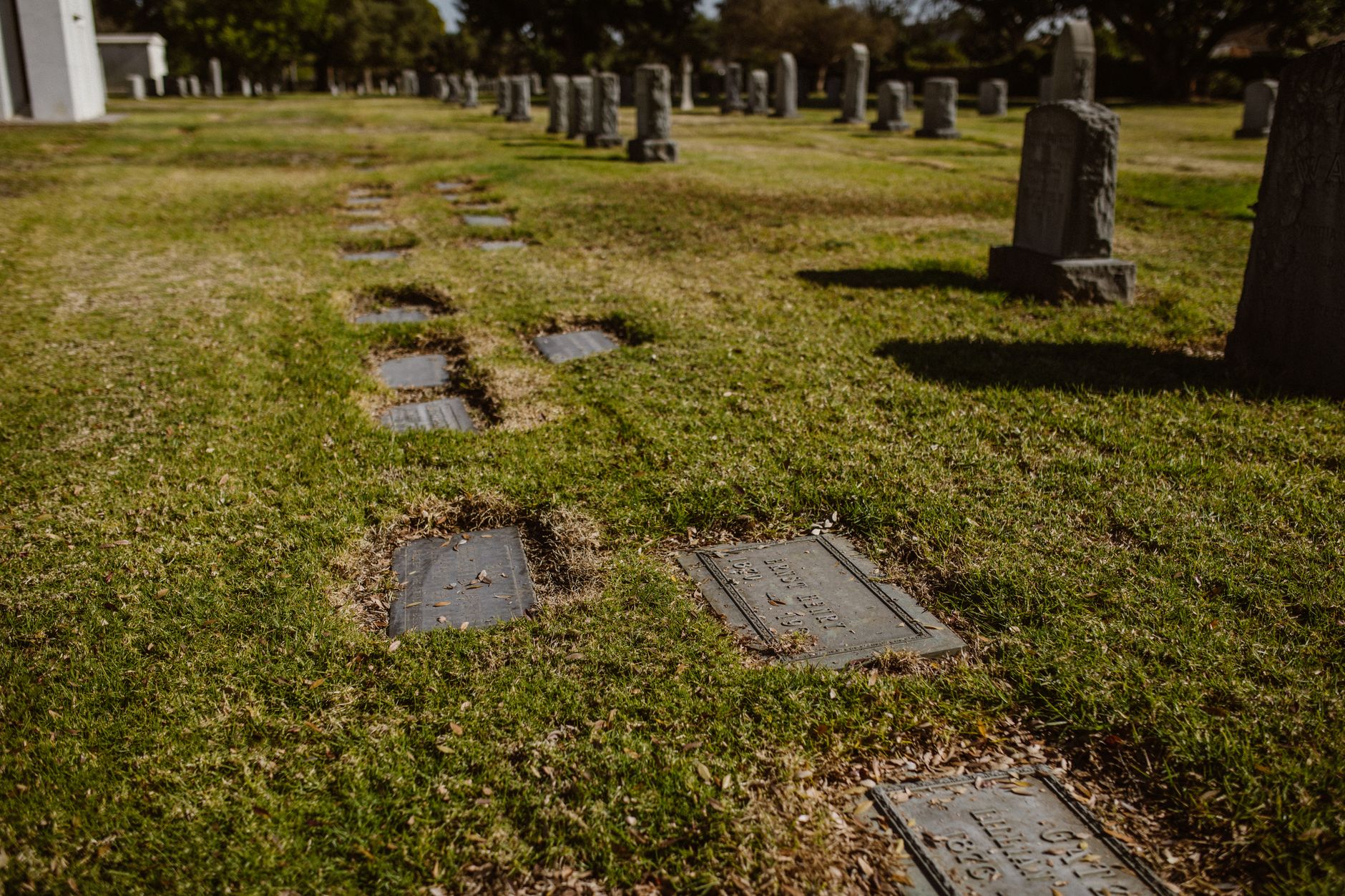
Flat Marker vs. Upright Headstone: Cost, Rules, and Style Comparison
Choosing between a flat grave marker and an upright headstone involves more than personal taste. This guide compares both options on price, cemetery regulations, design flexibility, and long-term maintenance so Sacramento families can make a confident, informed decision.
12 min read